Thursday, May 30, 2013

Magnum Opus MANCHESTER

As you can see on the pics - we enjoyed splendid weather in Manchester ... the cradle of industrialization ... communism ... then supposedly feminism...

*live* in the middle of the start to the 10k city run  


 The stadium of Manchester United - a MUST for every visitor to Manchest ;))

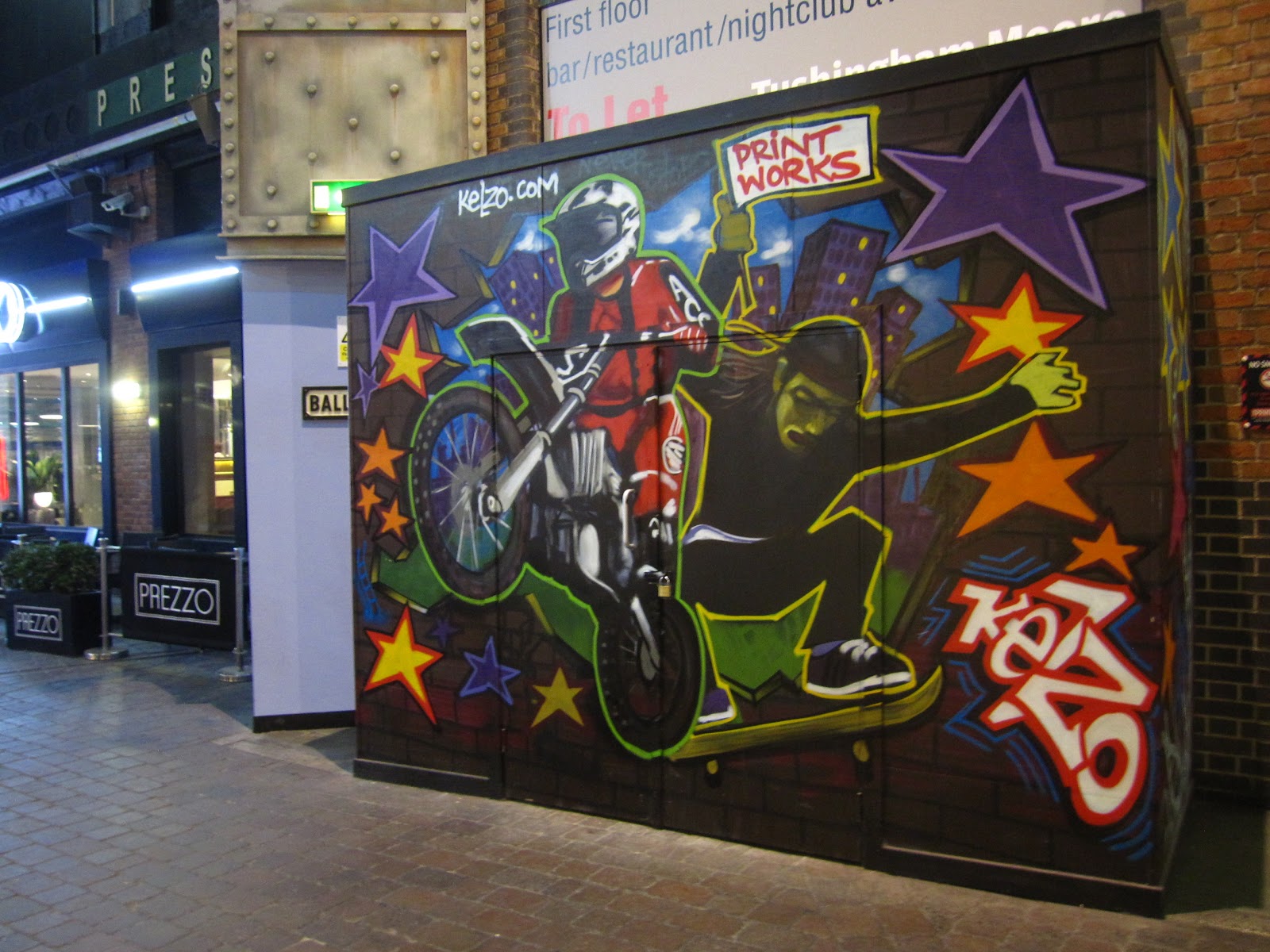
Walking through MODERN Manchester...


...lively river-side taverns and houseboat tours...

Wednesday, May 29, 2013

Erotic Republic of Iran

Link to the article:
http://www.foreignpolicy.com/articles/2013/05/29/erotic_republic_Iran_sexual_revolution%20


Erotic Republic


Iran is in the throes of an unprecedented sexual revolution. Could it eventually topple the regime?

BY AFSHIN SHAHI;  MAY 29, 2013

When someone mentions Iran, what images leap into your mind? Ayatollahs, religious fanaticism, veiled women? How about sexual revolution? That's right. Over the last 30 years, as the mainstream Western media has been preoccupied with the radical policies of the Islamic Republic, the country has undergone a fundamental social and cultural transformation.

While not necessarily positive or negative, Iran's sexual revolution is certainly unprecedented. Social attitudes have changed so much in the last few decades that many members of the Iranian diaspora are shellshocked when they visit the country: "These days Tehran makes London look like a conservative city," a British-Iranian acquaintance recently told me upon returning from Tehran. When it comes to sexual mores, Iran is indeed moving in the direction of Britain and the United States -- and fast.

Good data on Iranian sexual habits are, not surprisingly, tough to come by. But a considerable amount can be gleaned from the official statistics compiled by the Islamic Republic. Declining birth rates, for example, signal a wider acceptance of contraceptives and other forms of family planning -- as well as a deterioration of the traditional role of the family. Over the last two decades, the country has experienced the fastest drop in fertility ever recorded in human history. Iran's annual population growth rate, meanwhile, has plunged to 1.2 percent in 2012 from 3.9 percent in 1986 -- this despite the fact that more than half of Iranians are under age 35.

At the same time, the average marriage age for men has gone up from 20 to 28 years old in the last three decades, and Iranian women are now marrying at between 24 and 30 -- five years later than a decade ago. Some 40 percent of adults who are of marriageable age are currently single, according to official statistics. The rate of divorce, meanwhile, has also skyrocketed, tripling from 50,000 registered divorces in the year 2000 to 150,000 in 2010. Currently, there is one divorce for every seven marriages nationwide, but in larger cities the rate gets significantly higher. In Tehran, for example, the ratio is one divorce to every 3.76 marriages -- almost comparable to Britain, where 42 percent of marriages end in divorce. And there is no indication that the trend is slowing down. Over the last six months the divorce rate has increased, while the marriage rate has significantly dropped.


Changing attitudes toward marriage and divorce have coincided with a dramatic shift in the way Iranians approach relationships and sex. According to one study cited by a high-ranking Ministry of Youth official in December 2008, a majority of male respondents admitted having had at least one relationship with someone of the opposite sex before marriage. About 13 percent of those "illicit" relationships, moreover, resulted in unwanted pregnancy and abortion -- numbers that, while modest, would have been unthinkable a generation ago. It is little wonder, then, that the Ministry of Youth's research center has warned that "unhealthy relationships and moral degeneration are the leading causes of divorces among the young Iranian couples.

Meanwhile, the underground sex industry has taken off in the last two decades. In the early 1990s, prostitution existed in most cities and towns -- particularly in Tehran -- but sex workers were virtually invisible, forced to operate deep underground. Now prostitution is only a wink and a nod away in many towns and cities across the country. Often, sex workers loiter on certain streets, waiting for random clients to pick them up. Ten years ago, Entekhab newspaper claimed that there were close to 85,000 sex workers in Tehran alone.

Again, there are no good countrywide statics on the number of prostitutes -- the head of Iran's state-run Social Welfare Organization recently told the BBC: "Certain statistics have no positive function in society; instead, they have a negative psychological impact. It is better not to talk about them" -- but available figures suggest that 10 to 12 percent of Iranian prostitutes are married. This is especially surprising given the severe Islamic punishments meted out for sex outside marriage, particularly for women. More surprisingly still, not all sex workers in Iran are female. A new report confirms that middle-aged wealthy women, as well as young and educated women in search of short-term sexual relationships, are seeking the personal services of male sex workers

Of course, it would be a mistake to assume that traditional values have completely vanished. Iran's patriarchal culture is still strong, and orthodox values are still maintained by traditional social classes, particularly in provincial towns and villages. But at the same time, it would also be a mistake to assume that sexual liberalization has only gained momentum among the urban middle classes.

So what is driving Iran's sexual revolution? There are a number of potential explanations, including economic factors, urbanization, new communication tools, and the emergence of a highly educated female population -- all of which are probably partly responsible for changing attitudes toward sex. At the same time, however, most of these factors are at play in other countries in the region that are not experiencing analogous transitions. (Indeed, a wave of social conservatism is sweeping much of the Middle East, while Iran moves in the opposite direction.) So what is different in Iran? Paradoxically, it is the puritanical state -- rigid, out of touch, and dedicated to combating "vice" and promoting "virtue" -- that seems to be powering Iran's emergent liberal streak

Since the 1979 Islamic Revolution that swept Ayatollah Ruhollah Khomeini into power, the Iranian regime has promoted the idea of collective morality, imposing strict codes of conduct and all but erasing the boundary between private and public spheres. Maintaining the Islamic character of the country has been one of the regime's main sources of legitimacy, and as such, there is virtually no facet of private life that is not regulated by its interpretation of Islamic law. (Indeed, clerics regularly issue fatwas on the acceptability of intimate -- and sometimes extraordinarily unlikely -- sexual scenarios.) But 34 years on, Khomeini's successor has failed to create a utopian society -- a fact that lays bare the moral and ideological bankruptcy of a regime that is already struggling with economic and political crises.

This inconvenient truth is not lost on young people in Iran, where changing sexual habits have become a form of passive resistance. In defying the strictures of the state, Iranians are (consciously or subconsciously) calling its legitimacy into question. Meanwhile, the regime's feeble attempts to counter the seismic shifts currently under way -- such as its repeated warnings about the danger posed by "illicit relationships" -- only further alienate those it wishes to control. Slowly but surely, Iran's sexual revolution is exhausting the ideological zeal of a state that is wedded to the farcical notion of a utopian society and based on brittle, fundamentalist principles.

In New York, Sex and the City may be empty and banal, but in Iran, its social and political implications run deep.

http://www.foreignpolicy.com/articles/2013/05/29/erotic_republic_Iran_sexual_revolution%20

Thursday, May 9, 2013

9. Mai - EUROPATAG

On Europe Day, May 9, let’s remember that we still have more in Europe that unites us than divides us. Better still, let’s speak out. In a year’s time Europeans go to the polls in the European Parliamentary elections. It’s a chance for those who support a diverse, tolerant, and united Europe to have their say.


Hatred in Europe? Take a Closer Look

 The vast majority of people in Europe still enthusiastically back the great postwar European experiment: their Europe without frontier crossings, without a Babel of separate currencies and customs fees and regulations, without employment restrictions and worse.
This is so despite widespread resentment of unemployment, factory closings, price hikes, tax increases, and slashes to government programs, and despite widespread fear of the future being driven by a recession that tight monetary policies have to a significant degree deepened and prolonged.
Simply put, Europe today is nowhere near the overwrought Europe of the Great Depression period, when national self-interest and nationalist hatred were rallying cries that led to a world war. No. By and large, Europeans today still support banding together in solidarity as Europeans, rather than as members of antagonistic nations, to overcome the economic and existential challenges they are facing.
And, at least for now, the vast majority of Europeans want no part of ranting extremists. In Greece recently the press reported that villagers on the Aegean island of Thassos—people hard pressed by the austerity program required by creditor countries providing their country loans to get a handle on its unmanageable debt—had refused to accept food packages and other handouts because they were coming from a party that deceptively calls itself “Golden Dawn,” whose neo-fascist leaders are seeking to grab political power by whipping up xenophobia and violence against immigrants.
Stories and prophecies of doom and gloom and the bombast of extremists such as the people behind Golden Dawn in Greece and Jobbik in Hungary are the grist of the press. Stories about cooperation and solidarity and expressions of comity usually are not. Today, however, they should be.
This is because, even at this time of mounting social pressures, new survey results confirm that solidarity among ordinary people in Europe is still robust. People across the continent grasp the underlying social and economic pressures responsible for their plight even as they feel that that the austerity measures helping to drive the recession and exacting such a price from ordinary people are weakening the bonds that unite them.
The survey, carried out as the banking crisis in Cyprus was erupting, was commissioned by the Open Society Foundations.
Three-quarters of the respondents to the survey—administered to more than 4,000 persons in Spain, Italy, France, and Germany—indicated that the people of these countries are not scapegoating their fellow Europeans in Greece and other indebted countries for the ongoing financial crisis and consider it unfair for the hard-pressed to suffer the brunt of austerity measures for a situation they did not create. An overwhelming 93 percent of the survey respondents indicated that they believe politicians across Europe have lost touch with the suffering of ordinary people in the wake of the financial crisis.
Two-thirds of the respondents indicated that the countries of Europe should show solidarity and work together to tackle current economic and social challenges, while only a third said Europe’s individual countries should place a higher priority on national self-interest.
Fear of poverty brought on by lower wages and rising prices is the greatest worry of more than 70 percent of the persons surveyed. About 85 percent of the respondents indicated that the economic crisis had damaged European unity and solidarity and that some of the damage is severe.
In Germany, the largest creditor country where the survey was administered, the responses indicated that, despite the loss of billions of euros in German loans to Greece, there is a high degree of public concern over the increased tension and disagreements between the European countries and that, despite the crisis, most respondents indicated that they believe countries need to show solidarity.
The message from people in Europe is clear, if not loud. Europe will overcome the economic crisis and the social damage the austerity measures have caused by working together not separately. And it is the will of the Europeans to see that it succeeds.

Saturday, May 4, 2013

hold back tears ... move in the right direction

Gossip - Move in the right Direction

http://www.youtube.com/watch?v=h6TVI6D_sQM


One step closer every day at the time...


...hold back tears, so I can move in the right direction...

...faced my fears, now I can move in the right direction...


Never say never starting over, it's not perfect but it's getting closer!

Friday, April 26, 2013

Belo Monte Staudamm-Bau im Amazonas

Interessanter Artikel aus dem heutigen "Standard":
"Brasilien wirft die Demokratie auf den Müll"

http://derstandard.at/1363709286896/Brasilien-wirft-die-Demokratie-auf-den-Muell
von Julia Schilly, 26. April 2013, 15:09

Der Bau des Belo-Monte-Staudamms bringe Armut, sexuelle Gewalt und Zustände wie in der Militärdiktatur, berichten zwei Aktivistinnen


Der Bau des international heftig kritisierten Belo-Monte-Staudamms ist weiterhin im vollen Gange. Die brasilianische Regierung scheint auf eine Politik der vollendeten Tatsachen zu setzen: Denn obwohl noch zahlreiche Gerichtsverfahren laufen, ist bereits fast ein Drittel der Bauarbeiten des 11-Gigawatt-Kraftwerks realisiert.

Bei einer Pressekonferenz am Freitag in Wien berichteten zwei Aktivistinnen gemeinsam mit der grünen Europaabgeordneten Ulrike Lunacek von der aktuellen Situation vor Ort. "Wir haben eine Situation, die wir in der Zeit der Militärdiktatur (1964-1985, Anm.) erlebt haben. Der brasilianische  Staat hat die Demokratie auf den Müll geworfen", sagt Verena  Glass von der NGO "Movimento Xingu Vivo para Sempre".


Sexuelle Gewalt nimmt zu

So lebten vor einigen Jahren in Altamira im brasilianischen Bundesstaat Pará rund 100.000 Menschen. Im Zuge der Bauarbeiten seien innerhalb kurzer Zeit 50.000 weitere hinzugekommen. Seither habe etwa die Zahl der Sexualverbrechen gegen Frauen und Kinder drastisch zugenommen, berichtet Glass.


Zudem erfahre die Aktivistin immer wieder von sklavenähnlichen Bedingungen, unter denen Frauen, darunter auch Minderjährige, zur Prostitution gezwungen werden. Zuletzt habe sie ein 16-jähriges Mädchen betreut, das zwangsprostituiert wurde.

Prekäre Arbeitsbedingungen und Bespitzelung

Die Folgen würde aber die gesamte Bevölkerung von Altamira spüren: Bildungseinrichtungen und Gesundheitssystem seien überlaufen, die Preise in allen Bereichen stark gestiegen. Zudem seien auch die Arbeitsbedingungen auf den Baustellen prekär, betont Glass: "Die Arbeitsrechte werden nicht respektiert." Die Arbeiter haben schon mit Streik und Protesten dagegen reagiert, allerdings wurden diese von der Polizei stets niedergeschlagen.
Die brasilianische Regierung hat als Reaktion auf die aktuelle Situation in Altamira eine Sicherheitsgruppe entsandt. Um Proteste bereits im Keim zu ersticken, greife die Regierung unter anderem zum Mittel der Bespitzelung. Auch Verena Glass berichtet, dass in ihrer NGO unlängst ein Spionagefall bekannt wurde.

Rechte der Indigenen werden missachtet

Helena Palmquist arbeitet in der Bundesstaatsanwaltschaft in Pará. Dabei handelt es sich um ein spezielles Instrument innerhalb der brasilianischen Justizstruktur. Die Mitarbeiter werden vom Staat bezahlt und sollen sich für die kollektiven Interessen der Bevölkerung einsetzen, speziell für die indigenen Völker und die Umwelt.
Palmquist kritisiert rund um Belo-Monte insbesondere die geplante Trockenlegung eines 100 Kilometern langen Abschnitts des Rio Xingu, der "Volta Grande" - übersetzt bedeutet das "Große Schlinge". Denn die Bewohner gelten nicht als Direkt-Betroffene des Projekts, da ihr Wohngebiet nicht überflutet wird und damit laut Regierung "intakt" bleibt. Viele Menschen leben in dieser Region jedoch von Fischerei. Insgesamt wohnen entlang des Rio Xingu, einem Zubringerfluß des Amazonas, rund 14.000 Angehörige indigener Völker.


Zehntägiger Baustopp

Da die brasilianische Regierung die gesetzlich verankerten Umweltauflagen nicht erfüllt hat, konnte die Bundesstaatsanwalt einen zehntägigen Baustopp erreichen. Dass es bisher nicht mehr rechtliche Konsequenzen gibt, erklärt sich Palmquist vor allem mit einer "engen Verflechtung" von Regierung und Norte Energia, dem Unternehmen, das hinter dem Projekt steht. Im Moment sind noch 17 Klagen anhängig.


Wurzeln der Staudammprojekte aus Zeiten der Militärdiktatur

Die Idee für die Errichtung von Staudämmen entlang des Amazonas geht in die Zeit der Militärdiktatur der 1970er-Jahren zurück. Das damalige Projekt wurde sowohl in Brasilien als auch international heftig kritisiert. Das führte dazu, dass die Weltbank ihre Unterstützung zurückzog, wodurch die Pläne vorerst einmal als gescheitert galten.


"Projekt wird Leben von Indigenen fordern"

Auch Ex-Präsident Lula da Silva hatte sich vor seiner Wahl noch dagegen ausgesprochen. Doch im Amt machte er das gigantische Staudammprojekt unter dem neuen Namen "Belo Monte" zu einem der zentralen Punkte seines "Programms zur Beschleunigung des Wachstums".

Die groß angelegten Bauarbeiten sind mittlerweile selbst zum Zeichen des Wachstums geworden: Brasilien kann Belo Monte ohne finanzielle Hilfe von außen umsetzen. Auch die Unterstützung der Weltbank ist nicht mehr nötig. Weil es dabei auch um das Image geht, hat der Staudamm für die amtierende Präsidentin Dilma Rousseff ebenfalls oberste Priorität. "Sie will das Projekt mit aller Macht durchsetzen, auch wenn es das Leben des letzten Indigenen fordern wird", sagt Verena Glass.


Zu diesem Zweck werde falsche Propaganda verbreitet, betont Palmquist. So heiße es zum Beispiel immer wieder, dass ohne den Bau des Staudamms irgendwann die Lichter ausgehen würden. Und rein wirtschaftlich seien sogar die Fußball-WM im kommenden Jahr und Olympia 2016 in Rio de Janeiro gefährdet, wenn Belo Monte nicht gebaut werde.


Lunacek: "EU macht sich unglaubwürdig"

Das widerspreche den Tatsachen, betont EU-Abgeordnete Ulrike Lunacek im Rahmen der Pressekonferenz. Allein durch Maßnahmen der Energieeffizienz könnten 40 Prozent jenes Stroms eingespart werden, der in Brasilien bis 2020 angeblich produziert werden müsse. Das belege zum Beispiel eine Studie des WWF.
Die Politikerin kritisierte zudem, dass die Verantwortung für Belo Monte allein der brasilianischen Regierung übertragen werde: "Die EU macht sich mit dieser Außenpolitik, die die EU-Entwicklungspolitik konterkariert, nicht nur unglaubwürdig, sondern sie trägt auch dazu bei, dass Amazonien als Supermarkt für nationale wie internationale Konzerninteressen missbraucht wird."

Keine Gesprächsbereitschaft von Andritz

Auch die österreichische Firma Andritz ist mit einer Auftragshöhe von etwa 330 Millionen €uro an dem Projekt beteiligt und liefert Turbinen und Generatoren. Einladungen zu Diskussionen und Pressegesprächen haben Vertreter bislang abgelehnt. Auch eine Teilnahme an einer Diskussion am Samstag, 27. April im Zentrum für Internationale Entwicklung, wurde abgelehnt.
(Julia Schilly, derStandard.at, 26.4.2013)


Film- und Diskussionsabend mit Gästen aus Brasilien

Das Staudammprojekt Belo Monte: Alles rechtens!?

Samstag, 27. April, 19-21 Uhr

C3 - Zentrum für Internationale Entwicklung,
Sensengasse 3, Wien
Eintritt frei

Monday, April 15, 2013

Überraschender Besuch DAHEIM

Nachdem das 48h-Rennen "Mensch gegen Maschine" von Wien nach Paris (bei dem ich als Betreuerin im Team der Radfahrer dabei gewesen waere) in seiner ursprünglichen Form abgesagt wurde, hab ich jetzt ganz unerwartet aber umso erfreulicherweise einige Tage daheim verbracht :))

Das Wetter war mir hold und ich hab schon eine schöne erste FrühlingsSonnenBräune abbekommen.
Frühlingsausflug nach Pitten, an die Hohe Wand und nach Maria Schutz am Semmering auf a poa gscheite Klosterkrapfen vom Kirchenwirt :)

  *Kraxelpartie*

Frühlingskräutersalat frisch aus Oma's Garten!

Wednesday, April 3, 2013

Historic EDINBURGH

Edinburgh Castle

The weather was surprisingly friendly during my short visit in Scotland during my Easter break. 
The most challenging aspect was definitly the Scottish accent ... at the beginning I wasn't quite sure whether people were talking in English language to me *lol*

The Scott monument.


climbing Calton Hill ... Edinburgh's acropolis ;)


 on top of Arthur's seat ... looking over Edinburgh


 Grassmarket in downtown :)


The Scott monument


 delicious Scottish salmon


adventurous window shopping :))

 Eating authentic Haggies in a traditional pub: blood cake, heart liver and lung in a sheep's stomach ... what an interesting combination!!